Open Source AI Assistants: What Owners Should Know
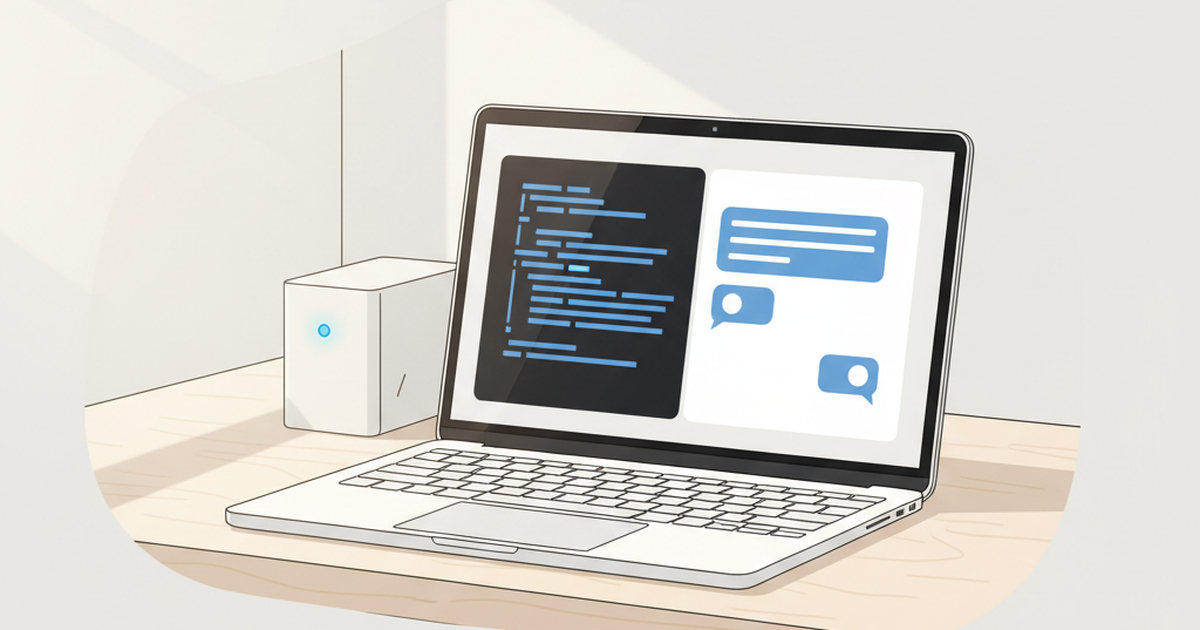
An open source AI assistant is software you are free to run, read, modify, and share, usually built on a model whose weights are published openly. You can host it on your own hardware, keep your data off shared infrastructure, and change how it works. The cost of that freedom is setup and upkeep: you become the person who installs, updates, and secures it.
TL;DR: An open source AI assistant gives you control and privacy in exchange for setup and maintenance work. The category is real and capable now: the gap between the best open-weight and closed models narrowed from 8.04% to 1.70% on the Chatbot Arena leaderboard in a single year, per Stanford HAI's 2025 AI Index. Below are the notable projects, what each is good for, the honest trade-off, and where a managed-private option fits for owners who want the privacy without the second job.
If you run a business, "open source AI assistant" sounds like freedom and free, and it is partly both. But the words hide a few distinctions that decide whether one of these tools fits how you actually work. This post explains what open means here, lists the projects worth knowing, and is honest about the maintenance burden most articles skip.
What does "open source" actually mean for an AI assistant?
Open source in AI is two separate things stacked together: the model and the software around it. The model is the brain, and most "open" models are really open weights, meaning the trained parameters are published but not the full recipe. The software is the assistant: the interface, memory, and tool connections built on top. An assistant can be open source even when the model it runs is only open-weight.
The distinction matters because "open" is used loosely. The Open Source Initiative, which has defined open source software for decades, published an Open Source AI Definition in 2024 stating that a truly open source AI must provide not just the parameters but also the code and enough information about the training data for a skilled person to rebuild a substantially equivalent system. Open weights alone, the OSI says, do not meet that bar. Most popular "open" models ship weights and a license, not the full data recipe, so the precise term is open-weight.
For an owner, three layers decide what you actually get:
- Weights: Can you download and run the model yourself, offline if you want? Open-weight models say yes.
- Code: Is the assistant software itself published so you can read and change it? That is the open source part.
- License: What are you allowed to do commercially? This varies a lot, from fully permissive to source-available with conditions.
Keep those three straight and the project list below reads clearly. Some give you all three freely. Some give you open code on top of a model with a more restrictive license.
Notable open source AI projects, and what each is good for
Here are seven projects worth knowing, grouped by what they actually do. None is a drop-in replacement for a managed assistant out of the box, but together they show what the open ecosystem offers an owner today. Each entry names the license, because that is the part that decides whether you can use it for business.
1. Hermes (Nous Research): an open, steerable model for agents
Hermes is an open-weight model family from Nous Research aimed at agent-style use. The latest generation, Hermes 4, is a hybrid-reasoning model released in 405B, 70B, and 14B sizes; the flagship Hermes-4-405B is built on Meta's Llama-3.1-405B and uses explicit reasoning segments plus structured tool and JSON output, per its model card. License: Llama 3 (inherited from the Llama base). Good for: assistants that need to call tools, follow structure, and stay steerable.
2. Meta Llama: the open-weight base much of the ecosystem builds on
Llama is Meta's open-weight model family and the foundation many other projects, including Hermes, build on. At its LlamaCon event in April 2025, Meta announced the Llama ecosystem had surpassed one billion downloads, a signal of how widely these weights are used. License: Llama Community License, a custom source-available license with a clause requiring a separate license for the very largest companies. Good for: a capable, well-supported base model with broad tooling around it.
3. Mistral: permissive, efficient open-weight models
Mistral is a French lab known for releasing efficient open-weight models under a genuinely permissive license. Its earlier open releases include Mistral 7B and the Mixtral mixture-of-experts models, and in December 2025 it released the Mistral 3 family. The open releases ship under Apache 2.0, one of the most business-friendly licenses there is. License: Apache 2.0 (on the open releases). Good for: owners who want few license strings attached and efficient models that run on modest hardware.
4. Open WebUI: a self-hosted chat interface for your models
Open WebUI is a self-hosted, offline-capable web interface that puts a clean chat window in front of local or hosted models. It works with Ollama and OpenAI-compatible APIs and includes built-in document retrieval, and it is one of the most-starred self-hosting projects on GitHub. License: a modified BSD-3 ("Open WebUI License") that adds a branding-retention condition, so it is source-available rather than strictly OSI-approved. Good for: giving a self-hosted model a usable interface without building one.
5. Khoj: a self-hostable AI for your own documents
Khoj is a self-hostable personal AI that answers questions from your own files and the web, with semantic search, custom agents, and automations. It works with local or hosted models, so you can keep everything on your own machine if you choose. License: AGPL-3.0, a strong copyleft license, which matters if you plan to modify and redistribute it. Good for: turning your own documents into a searchable, answerable knowledge base you control.
6. Leon: an open-source personal assistant you self-host
Leon is an open-source personal assistant designed to run on your own server with a local-first, privacy-minded approach. It is actively moving toward a 2.0 agentic architecture with tools, memory, and context, while the older intent-classification version remains available on its main branch. License: MIT, about as permissive as licenses get. Good for: technical owners who want a fully self-hosted assistant base and are comfortable tracking active development.
7. The open-weight base layer, generally
Beyond named apps, the broader point is that open-weight models from labs like Meta, Mistral, and Nous now sit under most do-it-yourself assistants. You pick a model, pick an interface like Open WebUI, wire in your data, and you have a private assistant. The catch, covered next, is that you also become responsible for every layer you assembled.
The honest trade-off: control and cost vs setup and maintenance
The real trade-off is freedom for labor. Open source gives you control over your data, no per-seat vendor lock-in, and the ability to change anything. In return you take on selecting hardware, installing and updating the model and software, securing it, and being the one who fixes it when it breaks. The model is the easy part now; running it well over time is the work.
Two facts make this concrete. First, capability is no longer the blocker. Stanford HAI's 2025 AI Index found the gap between the top open-weight and top closed model on the Chatbot Arena leaderboard fell from 8.04% in January 2024 to 1.70% in February 2025, so open assistants now handle everyday work without a quality penalty. Second, the burden moves to operations and security. IBM's Cost of a Data Breach Report 2025 put the global average breach at $4.44 million, a reminder that a self-run server you forget to patch carries real downside, not just inconvenience.
For a deeper look at who should actually run the server, self-hosted vs managed-private AI assistant compares the do-it-yourself and hands-off paths directly, and how to self-host a personal AI assistant walks the build if you want to take it on.
Who should choose open source, and who should not?
Choose by your appetite for operations, not your enthusiasm for the idea. Open source suits owners who are technical, enjoy infrastructure, or have someone on staff who does. It suits anyone who wants to read and change how their assistant works. It suits cases where licensing freedom matters, which is why the Apache 2.0 and MIT projects above are appealing for business use.
It is a poor fit when your time is the scarce resource. An assistant that triages your inbox and drafts replies has to be reliable every day, and reliability is a maintenance commitment. A neglected open-source deployment is worse than no deployment: it can be insecure and unreliable at the same time. The freedom is real, but so is the ongoing labor, and most owners underestimate the second part.
A short way to decide:
- You have technical time or staff and want to own every layer. Open source, self-hosted. The control is the point.
- You want licensing freedom for commercial use. Favor the Apache 2.0 (Mistral) or MIT (Leon) options, and read each license before you build.
- You want the privacy of open source without the maintenance. A managed-private option keeps the open foundation and removes the upkeep.
That last case is common, and it is where managed-private hosting fits. Raegan is built on Hermes, an open-source agent from Nous Research, and runs on the customer's own server with the upkeep handled for them, so business data is never sold, shared, or dropped into a common cloud pool. It is one option among several here; for owners who want open foundations without the second job, it removes the maintenance while keeping the privacy.
For the wider category these tools sit inside, see what is a private AI assistant, and for the broader landscape of assistants generally, the AI personal assistant overview maps the field. To go deeper on running your own, the self-hosted AI assistant hub collects the practical guides.
Frequently asked questions
What is an open source AI assistant?
An open source AI assistant is software you can run, read, modify, and share, usually built on a model with openly published weights. You can host it on your own hardware and keep your data off shared infrastructure. The trade is that you handle setup, updates, and security yourself. Projects range from full assistants to the open-weight models underneath them.
Is open source the same as free?
Not quite. Open source usually means free to download and run, but you still pay in hardware, electricity, and your own time to set it up and keep it secure. Licenses also differ: permissive ones like Apache 2.0 and MIT allow broad commercial use, while others add conditions. Read the specific license before building anything for business use.
What is the difference between open source and open weights?
Open weights means the trained model parameters are published so you can run the model yourself. Open source, per the Open Source Initiative's 2024 definition, additionally requires the code and enough training-data information to rebuild a comparable system. Most "open" models ship weights and a license, not the full recipe, so the precise term for them is open-weight.
Are open source AI models good enough for real work?
For everyday assistant tasks, yes. Stanford HAI's 2025 AI Index found the gap between the best open-weight and closed model on the Chatbot Arena leaderboard shrank from 8.04% to 1.70% in one year. Open-weight models now triage email, draft replies, and run research at a quality close to leading closed ones, so capability is rarely the limiting factor.
Can I keep the privacy of open source without maintaining a server?
Yes. A managed-private assistant runs an open foundation on a server dedicated to you, so your data is never pooled into a shared training set, while a provider handles the operations and security. You keep the data residency and isolation that open source offers without becoming a part-time systems administrator. Confirm in writing that your data is never used for training.
Sources
- Open Source Initiative. "The Open Source AI Definition," 2024. https://opensource.org/ai/open-source-ai-definition
- Stanford Institute for Human-Centered AI. "2025 AI Index Report, Technical Performance," 2025. https://hai.stanford.edu/ai-index/2025-ai-index-report/technical-performance
- Nous Research. "Hermes-4-405B model card," 2025. https://huggingface.co/NousResearch/Hermes-4-405B
- Meta. "LlamaCon 2025: News and updates," 2025. https://ai.meta.com/blog/llamacon-llama-news/
- Mistral AI. "Mistral 3," 2025. https://mistral.ai/news/mistral-3/
- Open WebUI. "open-webui/open-webui," GitHub, 2026. https://github.com/open-webui/open-webui
- Khoj. "khoj-ai/khoj," GitHub, 2026. https://github.com/khoj-ai/khoj
- Leon. "leon-ai/leon," GitHub, 2026. https://github.com/leon-ai/leon
- IBM. "Cost of a Data Breach Report 2025," 2025. https://www.ibm.com/reports/data-breach
Raegan is a private AI assistant built on an open-source foundation and run on your own server, with the upkeep handled for you. Get early access.